A calmer
doorbell routine.

Help your dog learn what to do when the door goes.
Four small steps, at your dog’s pace.

One predictable routine

Doorbell
or knock
Go to
the mat
Get a
reward

Aim for calmer recovery. A little barking may still happen.

Before you beginA mat, some treats, a quieter space.

Choose your spot. Put the mat away from the entrance. Reduce outside sights and sounds if these trigger your dog.

Have rewards ready. Keep treats handy, but out of your dog’s reach.

Plan your barrier. If you need a gate or separate area, use one your dog already knows and is comfortable with.

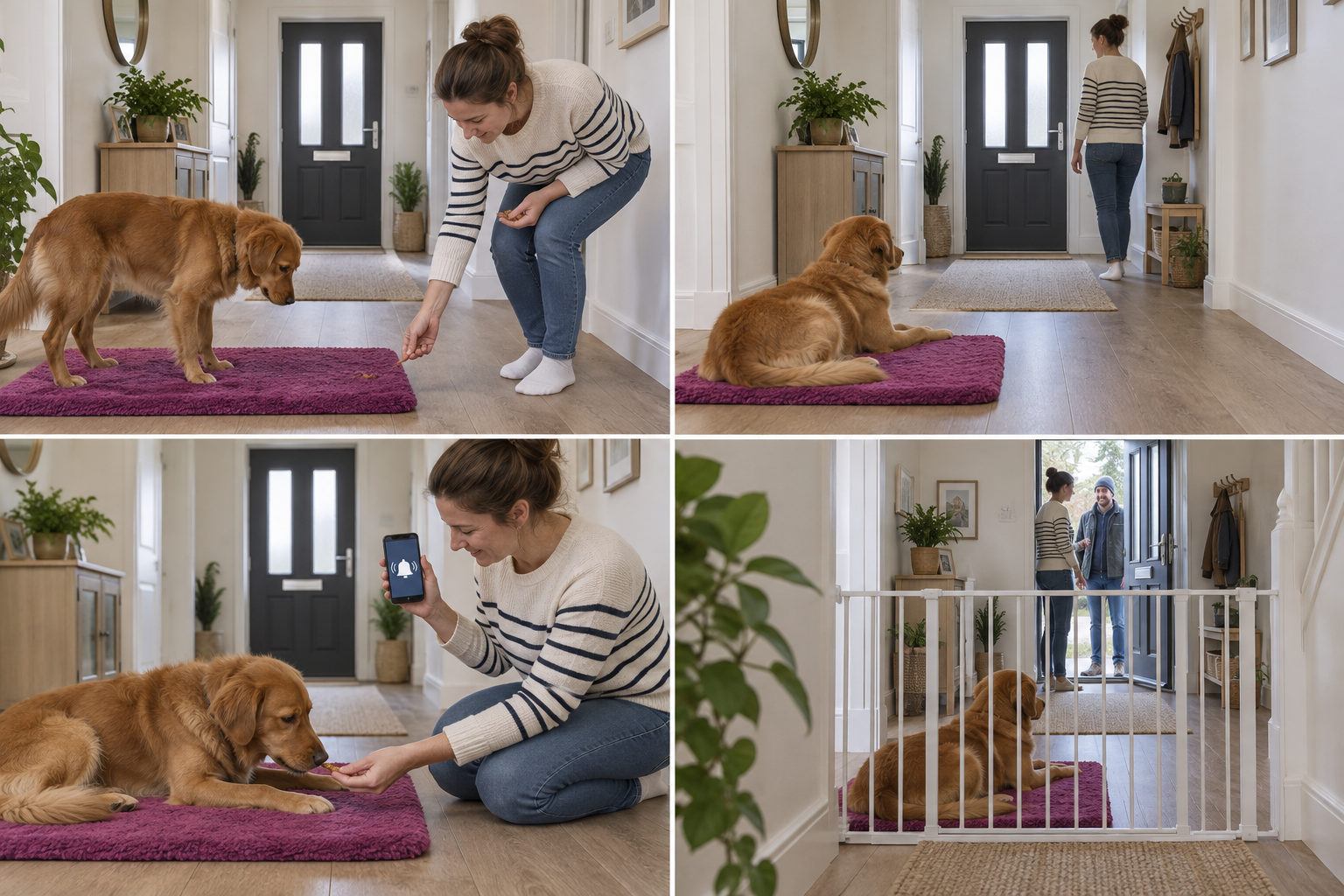
A person rewards a dog on a magenta mat away from the front door.
Start with the mat. Leave the doorbell out of it.

Make the mat
a good place.

  • Scatter treats on the mat.
  • Say “Okay” and toss a treat away to reset.
  • Reward your dog for coming back and staying.
Add the “Mat” cue

Once your dog readily returns, say “Mat” as they approach. Gradually give the cue earlier. Build the time they stay there first, then your distance from them.

Ready for step 2? Your dog goes to the mat on cue and is comfortable staying there.

A dog stays on the mat as their owner walks towards the closed front door.
A small movement, then back to reward.

Add your
movement.

  • Cue the mat. Take one step towards the door.
  • Return and reward your dog for staying.
  • Gradually build towards touching the handle and opening the door slightly.
If your dog gets up

Reset and make the next attempt easier. Reduce how far you move or how much you do with the door, then reward staying on the mat.

Ready for step 3? Your dog is comfortable on the mat while you move towards and handle the door.

An owner uses a quiet recording on a phone and rewards their dog on the mat.
Keep the sound quiet enough for your dog to cope.

Introduce
the sound.

  • Play a quiet doorbell recording or make a gentle knock.
  • Say “Mat”, then reward your dog there.
  • With practice, pause before the cue so the sound begins to predict the mat.
Build up gradually

Your dog should still be able to engage with you. Change only one thing at a time, such as volume or where the sound comes from. If barking increases, stop and make the next practice easier.

Ready for step 4? Your dog is coping well with the sound and following the mat routine.

A dog stays behind a familiar closed gate while a helper waits at the entrance.
A familiar helper. A comfortable barrier. No rush.

Practise
an arrival.

  • Ask someone your dog knows and is comfortable with to help.
  • Practise their approach, then a gentle knock or ring.
  • Have them wait outside while your dog follows the routine.
Opening the door and coming in

Gradually build towards opening the door. Practise entry only where appropriate for your dog. Doorbell training and coping with visitors are separate skills.

Keep it comfortable. Follow your dog’s individual visitor plan where needed.

Real life

Someone’s
at the door.

You don’t have to turn every arrival into a training session.

Expecting someone?

Ask them to message first. Prepare an activity on the mat and secure any needed barrier before opening the door.

A surprise caller?

  1. Scatter food away from the entrance.
  2. Secure your dog behind a barrier.
  3. Then answer the door.

Make it easier
when you need to.

Progress at your dog’s pace.
There’s no deadline.

Barking is building during practice

Stop practice. Next time, lower the volume, increase the distance or go back a step.

My dog is already barking at the door

If your dog can engage, use a familiar cue or scatter food away from the entrance, then secure your dog. Do not worry about rewarding barking during a difficult arrival. Between arrivals, focus on prevention and making the routine easier.

My dog is too upset to eat

Use distance and familiar barriers. Do not keep repeating cues or offering food when your dog cannot engage.

My dog is worried about visitors

If your dog is worried about visitors, or growls, lunges, snaps or bites, follow your individual DVBP visitor plan. Ask the team if you need one. The doorbell routine is only one part of helping your dog with visitors.